
available 24/7
Free Consultation
Shoplifting is a common theft crime in Arizona. Under Arizona law, depending on the circumstances of the crime, a conviction for shoplifting can be either a misdemeanor or a felony offense. In either case, you could face incarceration, fines, restitution, and other legal and social consequences.
If you are facing a shoplifting charge in Arizona, AZ Defenders can help. We represent individuals in Arizona accused of all kinds of theft crimes, including shoplifting. To speak with one of our experienced criminal defense lawyers, call us at (480) 456-6400 or contact us online at any time, any day of the year.
In this blog post, we define the crime of shoplifting under Arizona law, describe the potential penalties for a shoplifting conviction, and discuss some possible defense strategies that your defense attorney may be able to employ on your behalf.
Arizona Revised Statutes (ARS) Section 13-1805 is Arizona’s shoplifting statute that makes shoplifting a crime. The statute lays out the following elements of the offense:
Under the statute, you presumably have a “knowing” state of mind if you conceal unpurchased merchandise on your person while you are in the establishment, or if you use an artifice, instrument, container, device, or other article to facilitate the shoplifting.
Shoplifting is a specific intent-based crime. This means that a shoplifting charge does not require you to have left the store with the stolen items, as long as you engage in one of the behaviors noted above, “knowingly”.
ARS 13-1805 allows a merchant, or employees or agents of the merchant, to detain you on the store premises. This authorization is subject to conditions:
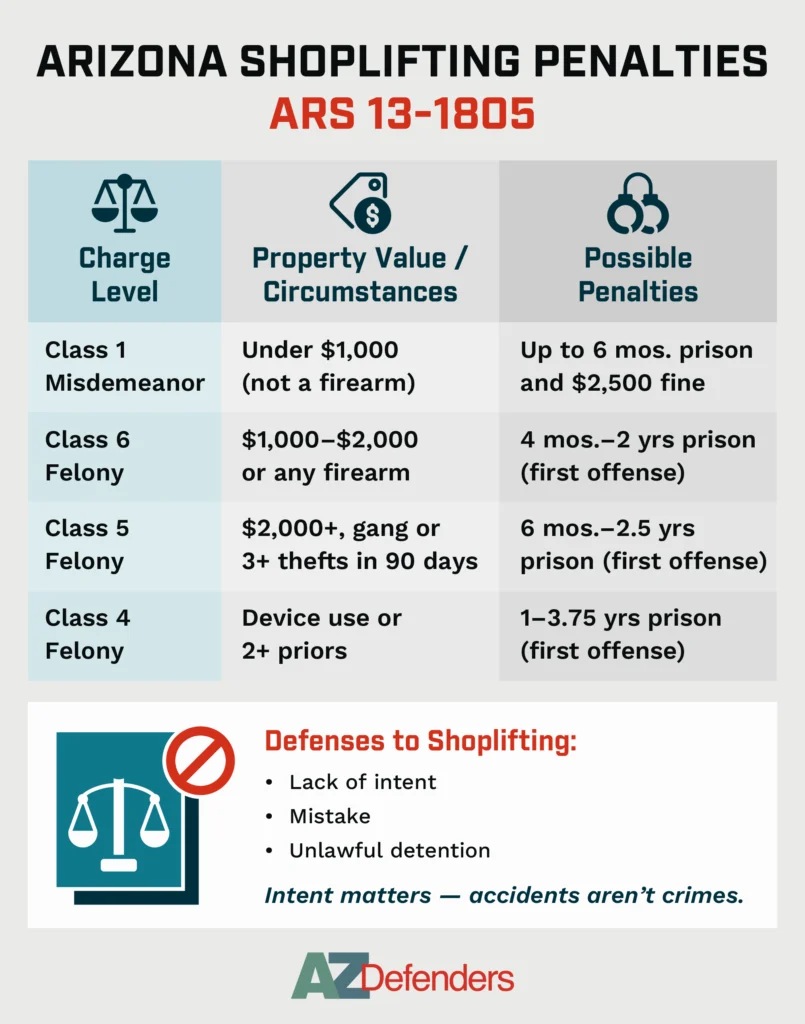
The legal penalty for a shoplifting conviction depends on factors including the value of the stolen property, plus additional specific circumstances that we identify below in increasing order of the charge’s severity.
Class 1 Misdemeanor Shoplifting
If property other than a firearm with a value of less than $1000 is stolen, shoplifting is a Class 1 misdemeanor.
The following kinds of shoplifting are Class 5 felonies in Arizona:
Shoplifting can be a Class 4 felony when:
Class 1 misdemeanor shoplifting carries the following potential penalties:
Depending on the class of felony conviction, the legal consequences can be as follows.
The sentencing ranges above can vary based on aggravating or mitigating factors.
Felony convictions of any class can also carry a fine of up to $150,000 for each conviction.
For a misdemeanor or felony conviction, you can also be subject to paying restitution. The court may also impose probation, which includes specific conditions and requirements that must be met.
Some specific consequences you may face after a felony shoplifting conviction include:
Some possible defenses to a shoplifting charge exist, depending on the specific facts surrounding the alleged incident.
The main defense is to cast reasonable doubt on whether you had the necessary culpable mental state: knowingly depriving the store of goods or the presumptive knowledge to support a shoplifting charge to the degree “beyond a reasonable doubt.”
People can, and do, make mistakes in stores. For example, let’s say you go through a self-checkout point of sale and legitimately forget to scan an item, but you paid for everything else. Especially if you have no prior history of charges for theft or shoplifting, this is arguably a mistake, not a knowing act to deprive the store of property.
Additional defenses may include: proving a lack of reasonable cause for detention at the store, an officer’s failure to administer Miranda rights in custody, or the inadmissibility of evidence against you.
If you are charged with shoplifting, you face serious consequences and the potential for life-altering punishment, including a criminal record. You need an experienced criminal defense attorney to help guide you, defend you, and assist you in obtaining the best possible result in your shoplifting case.
Call AZ Defenders today at (480) 456-6400 or contact us online for a free consultation, so we can start helping you with your shoplifting case today.